
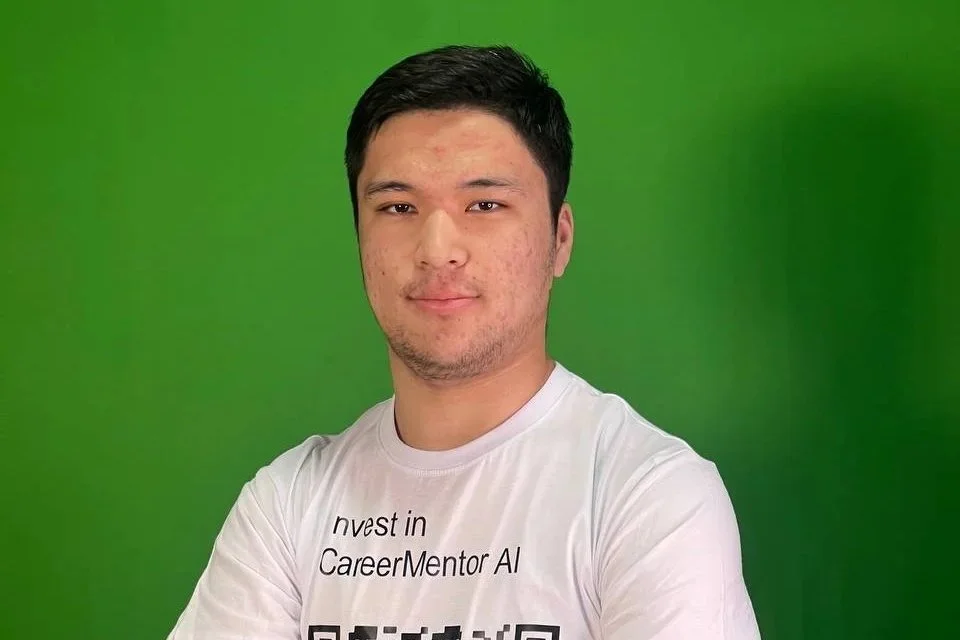
For many young people in Uzbekistan, choosing a career path remains unclear. Most students graduate without understanding their strengths or knowing which profession truly fits them. Rasul Seytibaev personally experienced this challenge — trying different paths, feeling lost, and constantly worrying about the future.
CareerMentor AI was created to address this gap. It is a digital platform that combines psychological assessment, AI-driven analysis, and real mentor guidance to help young people understand who they are and where they belong. Within minutes, users receive a personalized career roadmap and are matched with relevant mentors, internships, and job opportunities.
Rasul began developing CareerMentor AI as a first-year university student, working on the project entirely on his own. He had no programming team, no funding, and very limited business experience. Building an MVP under these conditions was extremely challenging, and emotional burnout and self-doubt became constant barriers. “There were moments when I felt I was too young and too early to be building a startup,” Rasul recalls.
Micromentor — the world’s largest free online business mentoring platform, introduced by the EBRD — became a turning point in his journey. The program provided not only guidance, but also structure, accountability, and a founder’s way of thinking. Through Micromentor, he gained:
A validated value proposition – clearly understanding who CareerMentor AI is for and what problem it solves.
A lean MVP focus – removing unnecessary features and concentrating on a realistic, buildable product.
Confidence in communication and pitching – presenting ideas clearly and engaging with mentors and investors.
“Micromentor didn’t just help me improve my startup, it helped me change how I see myself as a founder. The biggest value of Micromentor was not advice, but mindset — learning how to act like a founder, even without resources.”
As a result, Rasul went from having no pitch at all to winning 1st place at the U-Start Demo Day, earning a funded educational trip to Germany. His confidence, business thinking, and presentation skills improved significantly. He built his first real team, began working on monetization, and started being seen as a leader rather than just a student. Looking back, he reflects simply: “Micromentor showed me that mentorship is not about age or status, but about asking the right questions and taking action.”
Looking ahead, Rasul plans to build a full MVP, onboard more than 10,000 students, and launch CareerMentor AI in Uzbek, Russian, and English, with a long-term vision of expanding across Central Asia and creating regional impact.
